Telecom CRM and Self Service
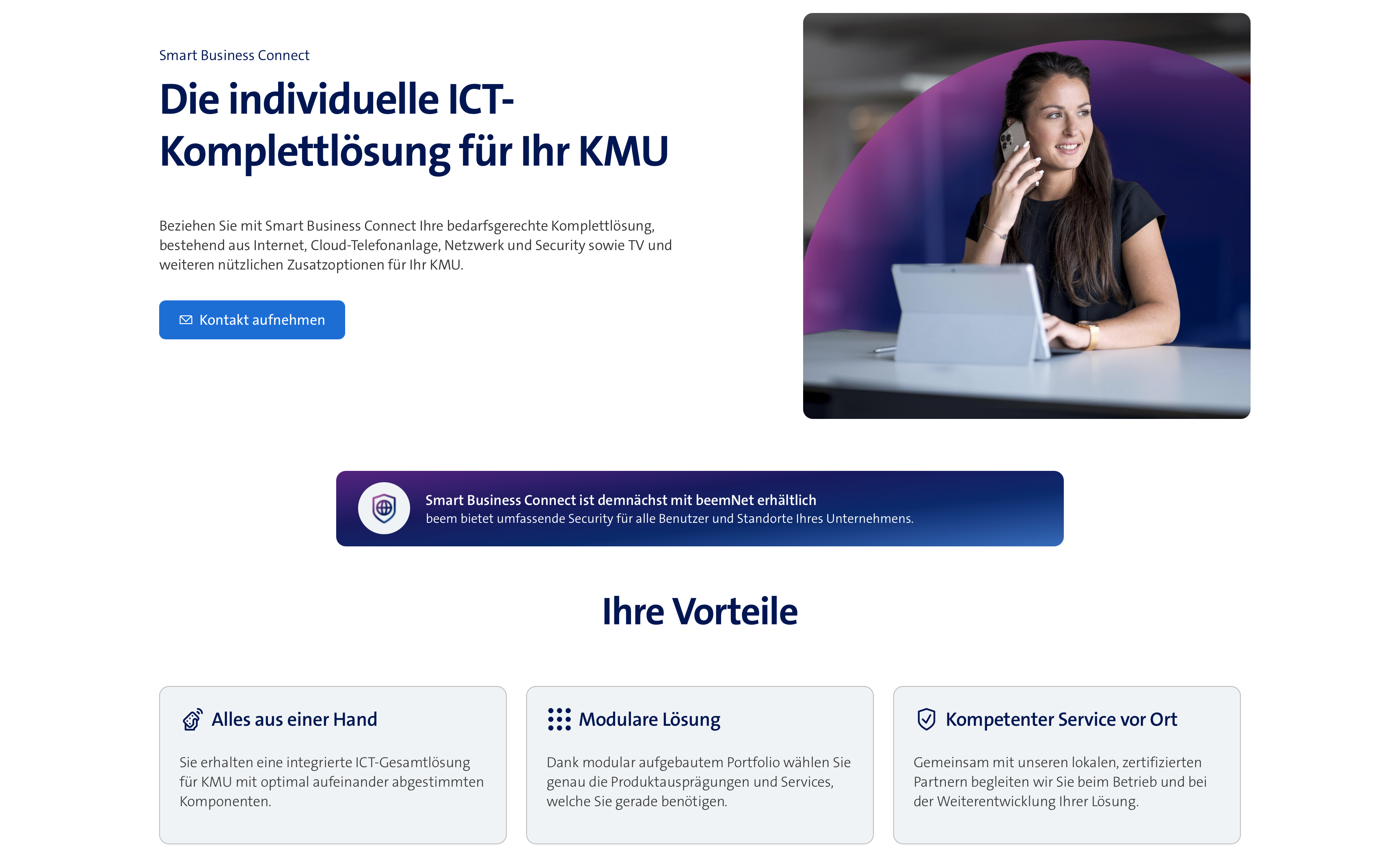
About the project
From 2015–2019 I worked on Swiss telco Sales and Self‑Service applications: Angular WebApps for SME and retail customers backed by an OpenShift/Oracle micro‑services platform. The scope covered Software‑Defined networking for SMEs (order, configure, change) and retail sales & ordering tools used by customers and internal sales channels.
- Angular front‑end suite (multi‑app) for sales journeys and self‑service
- OpenShift‑hosted micro‑services with Oracle middleware/DB integrations
- CRM, provisioning and billing integration; SSO and role‑based access
The programmes ran in a regulated, high‑availability environment with zero‑downtime objectives. We delivered incrementally: feature‑flagged rollouts, strong API contracts and close alignment with design system guidelines.
- Incremental delivery with canary/staged releases and rollback paths
- API gateway integration and schema‑validated service contracts
- Design system compliant components and accessible flows
- Monitoring, tracing and meaningful product telemetry
What we did
I contributed across the sales funnel and self‑service lifecycle: from product selection and eligibility to ordering, provisioning and post‑sales changes for Software‑Defined SME networking.
- Sales & Eligibility: Guided sales flows, address checks, options/pricing, quote creation
- Ordering: Robust forms, validation, and order orchestration with idempotent retries
- Self‑Service: Configuration changes, upgrades and incident flows with clear SLA feedback
We built Angular applications that integrate with OpenShift‑based micro‑services (REST/gRPC) and Oracle systems. The architecture emphasised loose coupling and resilience.
- Angular/WebApps: Shared component library, route‑level code‑splitting, SSR where needed
- Platform: OpenShift, API gateway, OAuth/SSO, Oracle middleware & DB
- Quality: Contract tests, E2E tests, synthetic monitoring, structured logging and tracing

Legacy Angular
We started this on Angular JS version 1 and had to migrate to version 2 with a fundamental conceptual change along with TypeScript. We did not try the transitional Hybrid or Side-by-Side approaches. Instead we made sure to have solid test coverage to not forget requirements. By making tests pass we were fairly sure that nothing was forgotten. The main challenge was to align on new Source Code style choices.