Telecom CRM and Self Service
About the project
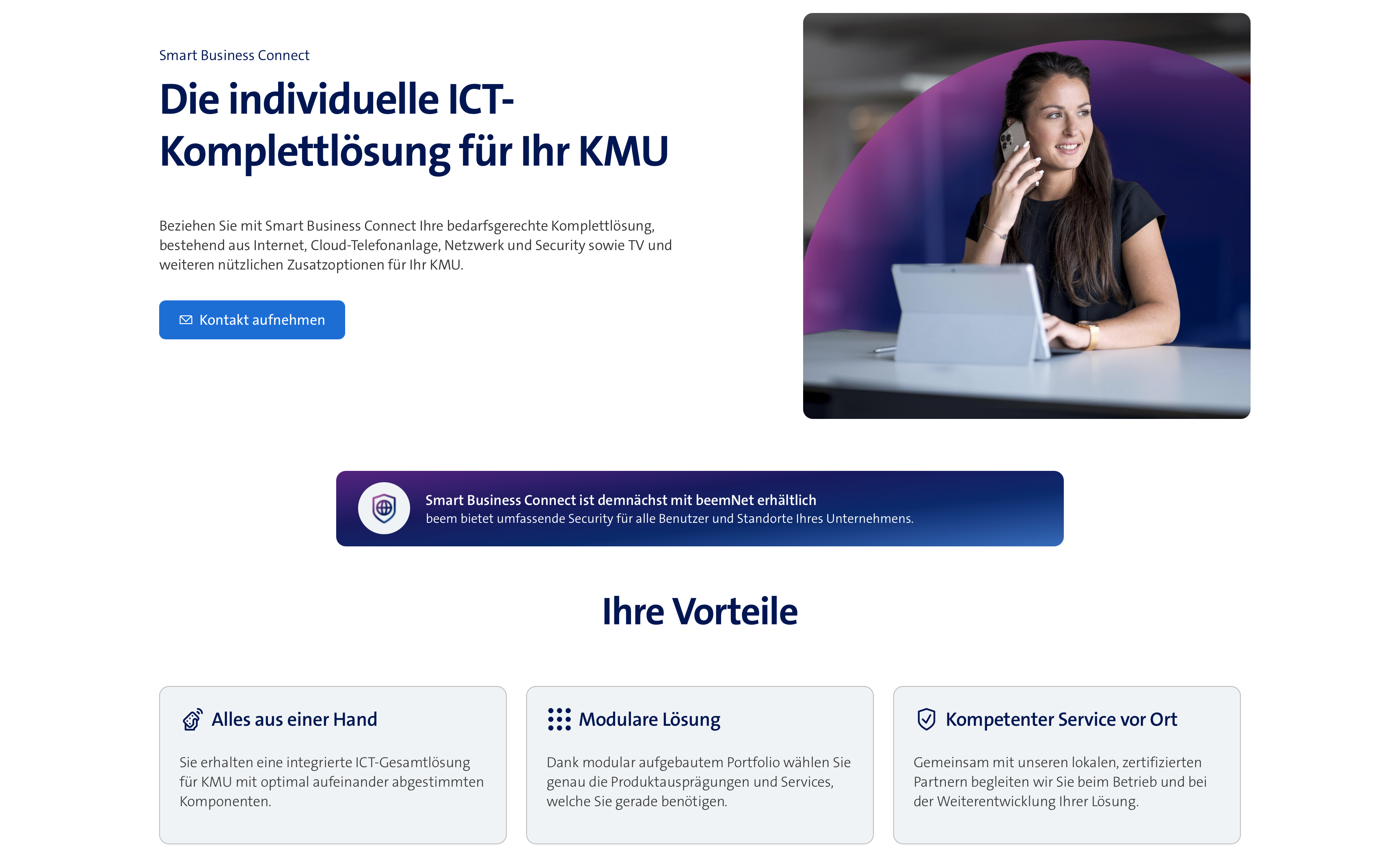
From 2015–2019 I worked on Swiss telco Sales and Self‑Service applications: Angular WebApps for SME and retail customers backed by an OpenShift/Oracle micro‑services platform. The scope covered Software‑Defined networking for SMEs (order, configure, change) and retail sales & ordering tools used by customers and internal sales channels.
- Angular front‑end suite (multi‑app) for sales journeys and self‑service
- OpenShift‑hosted micro‑services with Oracle middleware/DB integrations
- CRM, provisioning and billing integration; SSO and role‑based access
The programmes ran in a regulated, high‑availability environment with zero‑downtime objectives. We delivered incrementally: feature‑flagged rollouts, strong API contracts and close alignment with design system guidelines.
- Incremental delivery with canary/staged releases and rollback paths
- API gateway integration and schema‑validated service contracts
- Design system compliant components and accessible flows
- Monitoring, tracing and meaningful product telemetry
What we did
I contributed across the sales funnel and self‑service lifecycle: from product selection and eligibility to ordering, provisioning and post‑sales changes for Software‑Defined SME networking.
- Sales & Eligibility: Guided sales flows, address checks, options/pricing, quote creation
- Ordering: Robust forms, validation, and order orchestration with idempotent retries
- Self‑Service: Configuration changes, upgrades and incident flows with clear SLA feedback
We built Angular applications that integrate with OpenShift‑based micro‑services (REST/gRPC) and Oracle systems. The architecture emphasised loose coupling and resilience.
- Angular/WebApps: Shared component library, route‑level code‑splitting, SSR where needed
- Platform: OpenShift, API gateway, OAuth/SSO, Oracle middleware & DB
- Quality: Contract tests, E2E tests, synthetic monitoring, structured logging and tracing
